
Most homeowners look toward the broad surface of the roof when they are trying to judge its condition. Missing shingles, visible wear, dark patches, or storm damage naturally attract attention.
The lower edge of the roof receives far less notice.
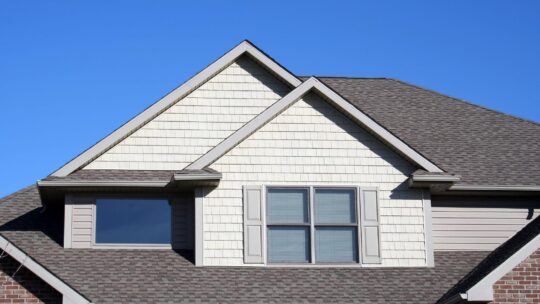
Yet the final section near the eaves is where several parts of the home come together. Roofing materials meet the edge of the decking. Gutters collect runoff. Fascia supports and finishes the roofline. Soffits cover the underside of the overhang, and attic ventilation may depend partly on openings located there.
Because so many systems meet in such a narrow area, the roof edge can reveal problems that are not obvious across the larger roof surface.
The Eave Is More Than the End of the Shingles
From the ground, an eave can look simple: shingles stop, a gutter begins, and the roof is finished.
The construction behind that line is more complicated.
The roof covering has to direct water toward the edge. The decking beneath it needs protection from moisture. The fascia and soffit form part of the exterior enclosure, while the gutter has to catch runoff and carry it away.
Each component has its own job, but none works completely independently.
If water does not leave the roofing surface cleanly, the gutter may not receive it correctly. If the gutter overflows repeatedly, the fascia and soffit may be exposed to more moisture than intended.
The edge works as a handoff point between systems.
Follow the Water After It Leaves the Main Roof Surface
A roof is designed to shed water downhill, but reaching the eave is not the end of the journey.
Water still needs to move away from the edge and into the drainage system.
Look at what happens during heavy rain. Does water enter the gutter cleanly, or does it overshoot in certain places? Are there sections where water runs behind the gutter? Do downspouts appear to move water away efficiently?
The answers can reveal issues that are easy to miss when attention stays on the shingles.
Roofing materials can appear intact while the lower edge experiences repeated wetting because the drainage path is not working as intended.
Gutters Can Affect the Roof Edge Above Them
A gutter problem does not always stay inside the gutter.
Leaves and debris can restrict water movement. Improper slope can allow water to remain in sections of the system. During heavy rainfall, blocked or overwhelmed gutters may spill water over their edges.
That overflow can repeatedly wet fascia, soffits, siding, or the area immediately below the roofline.
Homeowners may first notice peeling paint, discoloration, staining, or deteriorating wood rather than a roofing problem.
This is why replacing one visibly damaged board without checking the nearby drainage can lead to another repair later.
The visible deterioration may be the result of the problem rather than its original source.
Fascia Damage Can Be a Clue
Fascia boards sit in a particularly exposed position.
They help finish the roof edge and commonly provide a surface for gutter attachment. Because of their location, deterioration there deserves more than a cosmetic response.
Ask why the damage developed.
Is a gutter leaking at a joint? Is water running behind it? Has the roof edge allowed repeated moisture exposure? Is a section remaining wet because drainage is poor?
The answer matters because new fascia installed without correcting the source can eventually experience the same conditions.
A repair makes more sense when the cause and the damaged material are considered together.
The Soffit Shows What Is Happening Under the Edge
The soffit covers the underside of the roof overhang and can provide useful clues about conditions around the eave.
Sagging sections, staining, peeling surfaces, or visible deterioration should not automatically be assumed to be isolated finish problems.
Moisture may be coming from roof-edge drainage, gutter overflow, or another nearby source.
Soffits can also be connected to attic ventilation.
Where soffit vents are part of the ventilation design, they need to remain open enough for air to enter as intended. Paint, insulation, debris, or other obstructions can interfere with that pathway.
That makes the soffit both an exterior finish and, in some homes, part of a larger airflow system.
Look Up From the Ground Before Looking Down From the Roof
Homeowners do not need to climb onto a roof to notice every warning sign.
A ground-level inspection can reveal quite a lot.
Walk around the house and look for sections of gutter that appear uneven, fascia that looks discolored, soffit panels that sag, water staining beneath the roof edge, or areas where vegetation touches the structure.
Watch the house during rain if it is safe to do so.
Overflowing gutters, unusual streams of water, or dripping from places where water should not normally emerge can reveal how the edge is performing under real conditions.
These observations can provide useful information before a professional inspection.
Roof-Edge Problems Often Cross Several Systems
The eave is one of the places where trying to label a problem too quickly can be misleading.
A homeowner may see deteriorated fascia and assume the answer is carpentry. Another may notice gutter overflow and assume only the gutter needs attention. A blocked soffit vent might appear unrelated to the roof above it.
In reality, these conditions can interact.
Working with a roofing company in Madison, Wisconsin can be particularly relevant when the investigation needs to consider roofing materials, gutter drainage, fascia, soffits, ventilation, and insulation together instead of replacing whichever component shows the most obvious damage.
The objective should be to identify the path of the problem before deciding which material needs to be replaced.
Patching the Visible Edge May Miss What Is Happening Behind It
Roof-edge deterioration can extend beyond what is visible from outside.
If water repeatedly reaches the wrong area, the material behind fascia or beneath the lower roofing section may also deserve inspection.
This is why surface appearance alone can be misleading.
A freshly painted fascia board can look repaired while the moisture source remains. New gutter sections may improve drainage but fail to address damage that already developed behind them.
The repair scope should match what is actually affected.
That does not mean every eave problem requires extensive reconstruction. It means the condition should be traced far enough to distinguish a localized surface issue from a problem involving several connected components.
Lower Roof Edges Experience Different Conditions in Winter
Cold weather can make the eave behave differently from the main roof surface.
Snow and ice do not always melt or refreeze evenly across a roof. Conditions near overhangs can differ because the space beneath them is not heated in the same way as the attic area above the house.
Gutters can also collect frozen material, creating additional weight and interfering with normal drainage.
The important lesson is not that every winter condition signals a defect.
It is that the roof edge deserves attention because temperature, drainage, ventilation, and insulation can interact there.
Repeated problems in the same section are more useful clues than one isolated winter event.
Insulation and Ventilation Can Influence What Happens Above
The roof edge is not purely an exterior issue.
Conditions inside the attic can affect how the roof performs.
Insulation should limit unwanted heat transfer from the living space, while the ventilation system—where designed to use soffit intake depends on air being able to enter and move through the intended pathway.
If insulation blocks intake openings, the ventilation pattern may not work as planned.
Homeowners do not need to diagnose attic airflow themselves, but recurring roof-edge concerns may justify looking at both the exterior and interior sides of the system.
A problem visible outside can sometimes be influenced by conditions that begin inside the building envelope.
Trees and Debris Often Affect the Eaves First
Leaves, needles, seed pods, and small branches naturally travel downhill with rainwater.
That means much of the debris on a roof eventually reaches valleys, gutters, or the lower edge.
Homes near mature trees may therefore develop highly localized maintenance needs.
One side of the house can remain relatively clear while another gutter fills repeatedly because of nearby branches.
That difference matters.
Roof maintenance does not always need to be identical around the entire house. The sections exposed to heavier debris may require more frequent observation and cleaning than open sections.
The Roof Edge Can Reveal How Well the Systems Work Together
A house does not experience roofing, gutters, soffits, fascia, ventilation, and insulation as completely separate categories.
They meet physically and functionally around the eaves.
That is why the final few inches of the roof deserve more attention than they usually receive.
A damaged fascia board may point toward drainage. A soffit stain may suggest moisture arriving from above. Repeated gutter overflow can affect materials beside and behind it. Winter problems may raise questions about several parts of the assembly rather than only the shingles.
The strongest diagnosis follows those relationships instead of stopping at the first visible symptom.
Pay Attention Where the Roof Ends
The center of a roof can tell homeowners a great deal about material condition, but the edges often reveal how well the entire system is handling water, airflow, and exposure.
Look at gutters, fascia, soffits, roof-edge materials, and the areas directly beneath them as connected pieces.
Small signs around the eaves should not cause panic, but repeated staining, overflow, deterioration, or unusual moisture deserves investigation.
A roof does not finish its job when rain reaches the final shingle.
The last twelve inches are where water has to leave the roofing surface cleanly, enter the drainage system, and move away without damaging the surrounding structure. That narrow strip can reveal more about the health of the roof than its size suggests.