
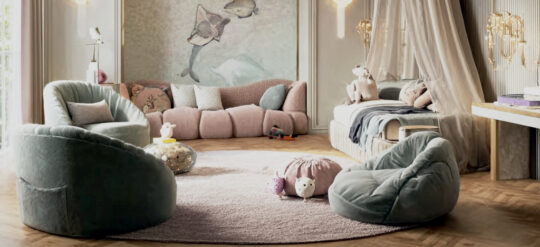
Designing a kids’ room that is both calm and functional yet still full of personality is one of those parenting challenges that no one warns you about. You start with a crib in the corner, and suddenly you’re trying to squeeze in a desk, bookshelves, toy bins, and enough floor space for a LEGO village that cannot, under any circumstance, be touched. Designing this space isn’t just about decorating; it’s about building a room that can survive everyday life, from sleepy mornings to after-school chaos.
Italian furniture brands have been surprisingly present in this world, bringing quality design even to furnishing pieces made for little ones. Some companies have experimented with scaled-down versions of their icons, like Cassina, which adapted the Utrecht Armchair by Gerrit Thomas Rietveld into the Utrecht Baby, a miniature model made just for kids. It’s a reminder that good design doesn’t have to be “grown-up” to matter. Sometimes, it simply means giving children furniture that fits their bodies, their habits, and their wild way of living.
Thinking Ahead: Furniture Should Grow With Them
One of the biggest mistakes parents make is buying furniture that only works for one specific age. Children grow at lightning speed, and their rooms need to adapt. Choosing adaptable pieces saves money, time, and a whole lot of frustration. Examples include beds that shift from toddler size to twin, shelving that can be rearranged as their interests change, and modular wardrobes from brands like Molteni&C. These options help the room evolve without requiring a full redesign every two years. When furniture grows with a child, the room gains a sense of stability, even when everything else in their life feels like it’s moving fast.
‘Cause Practical Doesn’t Mean Plain
Practicality gets a bad reputation, as if choosing durability or washability means sacrificing style. However, with the right approach, you can have both. Consider fabrics that can withstand markers, glitter glue, and those mysterious stains no one ever confesses to. Softer edges protect little heads, and lightweight chairs, like the colorful options from Kartell, make it easy for kids to move things around on their own. Small details, like drawers that don’t jam or surfaces that wipe clean in seconds, can turn daily routines into something smoother. A functional room doesn’t have to feel sterile. It just needs to support the way your kids really live.
Space Matters: A Home for Everything (Almost)
If your kids share a room, you know how fast the floor can disappear under toys, shoes, books, and art projects. Designating zones helps the room feel less chaotic. A reading nook by the window, a quiet corner for homework, or a dedicated space for play can give each activity its own identity. Storage plays a huge role here. Tall wardrobes from Poliform or Novamobili can stretch upward rather than outward, freeing precious floor space. Bins that slide under the bed, shelves mounted high enough to stay out of the “everything becomes a trampoline” danger zone, and simple closet systems make it easier for kids to tidy up without a battle.
Choosing the Right Colors and Materials for Your Kid’s Life
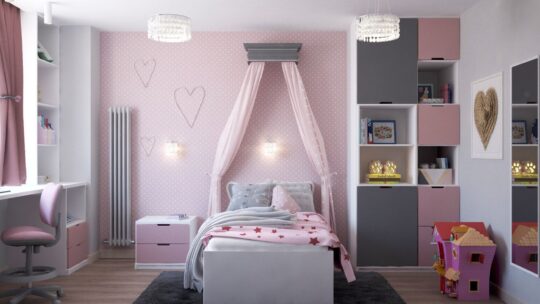
Parents often underestimate how much colors influence the vibe of a room. Soft, calming tones help with bedtime and early mornings, while brighter accents give kids a sense of energy and playfulness without overwhelming the space. Natural materials, like wood used by Riva 1920 or Bonaldo, bring warmth and a grounded feel to a kids’ room that can otherwise spin into chaos. Fabrics should be breathable and textured enough to hide small messes. When you combine comfort, color, and durability, the room becomes an inviting place where your kids actually want to spend time.
The Study Corner: Where Focus Finally Happens
At some point, every child’s room needs to make space for homework. A dedicated study corner can set the tone: “This is where I get things done.” Choosing the right desk is key: something sturdy, proportioned for their size, and ideally adjustable so it grows with them. Brands like Arketipo and Kristalia offer clean, modern designs that blend well with colorful rooms. Lighting is just as important. A focused lamp, like those designed by Foscarini, can make a huge difference during late-afternoon math sessions. A supportive chair that isn’t too bulky (and doesn’t spin too fast to become a toy) can help kids stay grounded, both literally and mentally.
The Room as a Little World of Its Own
The most exciting part about designing a kids’ room is realizing that it’s the one space in your home that can be a little wild, a little quirky, and full of imagination. Once the essentials are in place (the adaptable furniture, the right storage, the calming colors), you can let your child shape the rest. Maybe they want a wall for rotating artwork, or a shelf dedicated to souvenirs collected during family trips. The best kids’ rooms aren’t perfect; they’re alive. They evolve with every new interest, every growth spurt, and school year. That’s exactly what makes them magical.