


Your wooden deck is a special place. It’s where your family gathers on warm evenings. It’s also where you enjoy morning coffee and watch the sunrise. Over time, dirt, mildew, and grime build up on the wood surface.
These unwanted materials make your deck look dull and worn out. Many homeowners want a clean deck that looks brand new. The good news is that pressure washing wooden deck surfaces can bring back that fresh appearance.
The challenge is doing it safely. Improper techniques can cause real damage. Wood can splinter, gouge, or lose its protective grain layer.
This is where deck cleaning safety matters most. Learning the right way to clean protects your investment. A quality wooden deck costs thousands of dollars. You want that deck to last for many years.
This guide walks you through everything you need to know. You will learn how to pick the right equipment. You will discover the best techniques for your specific wood type.
Pressure-treated pine, cedar, and redwood all need slightly different care. This article covers all of them. You might choose to handle the cleaning yourself. You might decide that local power washing professionals are the better choice.
Either way, this information helps you make smart decisions. Your deck deserves proper care and attention.
Understanding Your Wooden Deck’s Needs Before Pressure Washing
Before you start with a pressure washer, learn about your deck. It has a story in its wood type, age, and condition. Knowing the wood type is key to a good maintenance plan. This prevents damage and saves money.
Softwoods like pine, cedar, and redwood are popular for decks. Pine is cheap but soft and easy to damage. Cedar and redwood resist rot and bugs well. Hardwoods, like pressure-treated lumber, are denser and stronger.
Check your deck’s color, grain, and any installation stamps to identify it. Softwoods need gentle cleaning, while hardwoods can take more.
Next, inspect your deck’s surface. Walk it and press a screwdriver into the wood to find soft spots. These spots may rot and can’t handle pressure washing.
Look for loose boards, nails sticking out, splintering, and peeling stain or sealant. Fix these problems before you clean.
The age of your deck is also important. Older decks need more care. If your deck is over ten years old, inspect it closely. Knowing this ensures your deck looks great after washing.
Choosing the Right Pressure Washer Settings for Wood
Choosing the right pressure washer settings is crucial for cleaning your deck without damage. Knowing the PSI needed for wood decks helps you choose the best method. Most decks need 500 to 1200 PSI for effective cleaning. This is lower than what’s needed for concrete or brick.
PSI is like the force of the water spray. A washer over 1500 PSI can damage wood by causing “furring.” This makes the wood grain fuzzy and rough. It’s hard to fix. Your deck cleaning tools should be gentle, matching wood’s delicate nature.
Water volume, or GPM, also affects your cleaning. Sometimes, more water volume can work with less pressure. This balance helps protect your wood investment.
Nozzle selection is key to success. Most use color coding: white for 40 degrees, green for 25 degrees, and red for zero degrees. For decks, start with a white or green nozzle. These wider sprays spread pressure evenly.
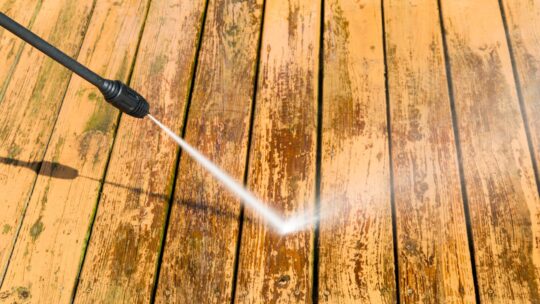
Keep your nozzle 12 to 18 inches from the deck. Always spray water along the wood grain, not across it. This prevents etching and keeps your deck looking great while cleaning away dirt and grime.
Step-by-Step Guide to Safely Pressure Wash Your Deck
Start by getting your deck ready. Move all furniture, planters, and decorations off the deck. Use a stiff brush to sweep away dirt and leaves.
Protect nearby plants and electrical outlets with plastic sheeting. Pre-wet the wood with a garden hose on low pressure. This helps the wood soak up water evenly.
Think about using a deck-specific cleaning solution before washing. It loosens dirt and mold. Pick a mild day without hot sun to avoid wood cracking.
Begin washing in smooth, overlapping strokes with the wood grain. Keep a steady distance and speed. Avoid staying in one spot to prevent damage.
Start at the house and move outward, cleaning one or two boards at a time. Be extra careful with corners, railings, and stairs using lower pressure.
After washing, let your deck dry completely. Wait 48 to 72 hours in good weather before sealing or staining. This prevents mildew and helps finishes last longer. Light sanding may be needed to smooth the wood grain.
When to Call Local Power Washing Professionals
It’s wise to know when to call local power washing pros. Some deck jobs need expert hands. For example, multi-level decks with complex designs or deep damage require pro cleaning.
Decks with old or fragile wood also need special care. If you’re short on time or can’t do the job safely, hiring pros is a good idea.
Professional teams offer big benefits. They use top-notch equipment with precise pressure settings. Local experts know how to handle different wood types and conditions.
They also have insurance to protect you. Their work is faster than DIY. Plus, they might offer extra services like wood repair and sealing.
Finding good local power washing pros is easy. Look up reviews on Google and Yelp. Ask neighbors for their opinions. Make sure they’re licensed and insured.
Get written estimates and ask about their experience with wooden decks. Find out about their cleaning methods and warranties.
Choosing local deck cleaning experts helps your community. Local businesses rely on good word-of-mouth. Many offer free estimates and can tell you if pressure washing is right for your deck.
Conclusion
Pressure washing your wooden deck is a smart way to keep it looking fresh and new. You now know the key steps for a successful project. It’s important to understand your wood type and choose the right pressure washer settings.
Using proper technique is also crucial for deck surface protection. Keeping your PSI between 500-1200 and using wide-angle nozzles helps protect your deck. Working with the grain and keeping a proper distance from the surface are simple actions that make a big difference.
Pressure washing safety should always be your top priority when cleaning your deck. The tools are powerful, so respect them. Give your deck enough drying time after washing to prevent mold and mildew growth.
These steps take time, yet the effort pays off in the long run. A clean, well-maintained deck becomes a beautiful space for your family and friends to enjoy for many years to come.
Wood deck care is an investment in your home. You can tackle this project with confidence using what you learned from this article. Some homeowners prefer to handle the work themselves, while others reach out to local power washing professionals for expert help.
Both options work great when done the right way. What matters most is that your deck gets the care it deserves. Whether you choose to do it yourself or call in the pros, your wooden deck will thank you with lasting beauty and strength for seasons to come.